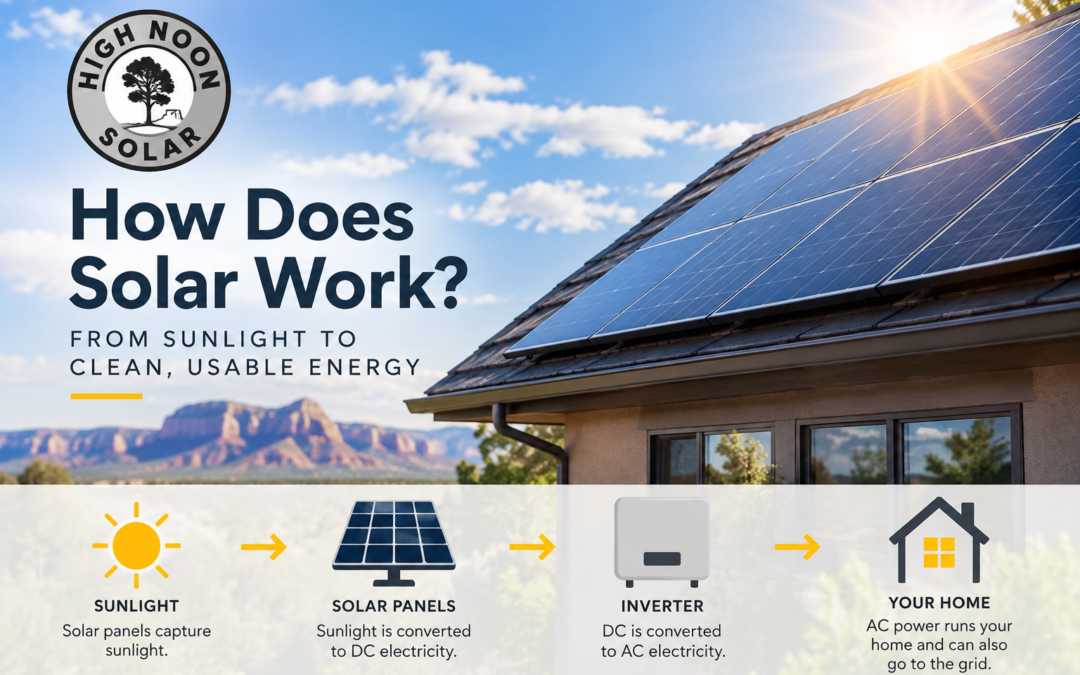
Solar panels convert sunlight into electricity that can be used by your home or business.
Each panel contains photovoltaic, or PV, cells. When sunlight hits those cells, they produce direct-current (DC) electricity. An inverter then converts that electricity into alternating-current (AC) power, which is what homes and businesses use.
For a grid-connected system, solar power is used by the property first. Depending on the system design and utility rules, extra production may be sent back to the grid or stored in a battery for later use.
What Does an Inverter Do?
The inverter is one of the most important parts of a solar system. Its main job is to convert the DC electricity produced by the solar panels into usable AC electricity.
Some systems use a central or string inverter, while others use microinverters at each panel. The best option depends on the property, system layout, shading, equipment, and project goals.
How Long Do Solar Panels Last?
Solar panels are designed to operate for decades, although their output gradually decreases over time.
The exact expected life, degradation rate, and warranty depend on the manufacturer and model. Reaching the end of a warranty period does not mean a panel suddenly stops producing electricity.
Learn more about how long solar panels last.
Does Solar Require Much Maintenance?
Solar panels generally require relatively little routine maintenance.
Rain often takes care of normal dust and debris, although snow, leaves, pollen, or heavy dirt can occasionally affect production. Monitoring system performance is one of the best ways to notice when something may need attention.
We do not recommend homeowners climb onto a roof to inspect wiring, mounting hardware, or electrical equipment themselves. If your system is showing an unexpected drop in production, it is better to have it checked by qualified personnel.
Learn more about solar panel maintenance.
Choosing the Right Solar System
The basic science behind solar is simple, but the right system is different for every property.
Roof direction, shading, available space, energy use, utility requirements, future loads, battery goals, and equipment selection all affect the final design.
High Noon Solar looks at the property and the customer’s actual needs rather than treating solar as a one-size-fits-all product.
This is probably much closer to the tone I’d use across the whole Solar Notes section. It keeps the articles approachable and lets the linked pages handle the deeper detail.