
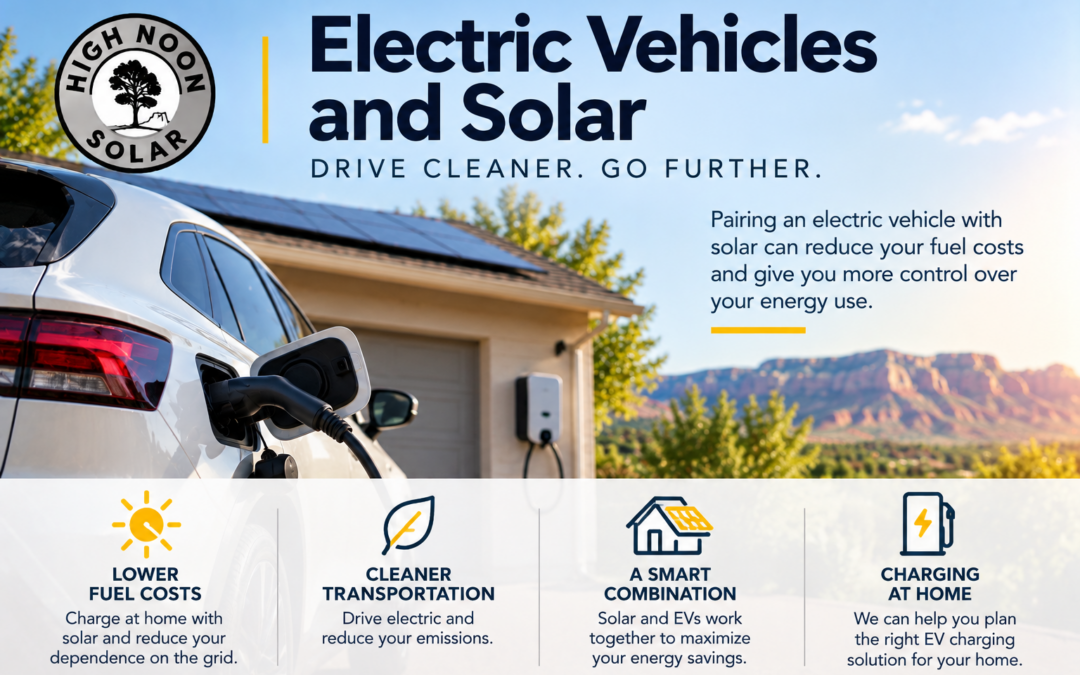
Electric vehicles and solar power can work well together. Charging an EV at home increases your electricity use, and a properly designed solar system can help offset some or all of that additional consumption.
For homeowners in the Grand Valley, that might mean using solar energy to help cover everything from the daily commute around Grand Junction to weekend trips out toward Fruita, Palisade, or the Colorado National Monument.
How much solar does it take to charge an electric vehicle?
There isn’t one set number of solar panels required to charge an EV.
The amount of energy an electric vehicle uses depends on several factors, including the vehicle’s efficiency, how many miles it is driven, driving conditions, charging losses, the size and production of the solar panels, and the amount of usable roof or ground space available.
Rather than estimating based on a generic number of panels, High Noon Solar can look at your expected vehicle usage along with your home’s existing electricity consumption and design a system around your actual needs.
You will also need appropriate EV charging equipment at your home or business. Depending on the vehicle and desired charging speed, that may be a standard outlet or a dedicated Level 2 EV charger.
Can solar reduce the cost of charging an EV?
Solar can help reduce the amount of electricity you purchase from the utility over time. The actual savings depend on your utility rate, charging habits, solar production, net-metering rules, and how much of your vehicle charging occurs while the solar system is producing energy.
Customers who can charge during the day may be able to use more of their solar production directly. Customers who charge mostly at night may still benefit from net metering or battery storage, depending on the utility program available at their property.
For many local drivers, EV use is a mix of short daily trips and longer drives around Western Colorado. Whether you’re commuting across Grand Junction, heading to a farmers market, driving out to a festival in Palisade or Fruita, or spending the weekend exploring the Monument, those miles all add to your home’s electricity use. Planning for that usage up front can make a big difference in how a solar system is sized.
What incentives are available?
Solar, battery-storage, EV, and EV-charging incentives change over time and can vary based on the customer, property, utility, and type of project.
Rather than listing incentive amounts that may become outdated, we recommend checking current federal, state, local, and utility programs when planning a project.
High Noon Solar can help identify programs that may apply to a solar or storage project, but customers should confirm tax eligibility with a qualified tax professional.
Planning for an EV when designing solar
Even if you do not own an electric vehicle yet, it can be helpful to mention future EV plans when designing a solar system.
Adding an EV can significantly increase a home’s annual electricity use. Accounting for that future load during the initial design may help avoid undersizing the system.
Other future loads worth considering include additional electric vehicles, heat pumps, electric water heating, home additions, battery storage, or simply increased household or business electricity use.
Solar, storage, and transportation
Solar and electric vehicles are both part of a broader shift toward using electricity for more of our everyday energy needs. When they are planned together, homeowners and businesses can get a clearer picture of their future electricity demand and design a system that fits how they actually use power.
If you are considering solar, an EV, battery storage, or a combination of these technologies, High Noon Solar can help you evaluate your energy use and determine what kind of system makes sense for your property.