
Lighting technology has changed a lot over the years.
Incandescent bulbs produce light by heating a filament, which means much of the electricity they use is lost as heat. Compact fluorescent lamps, or CFLs, improved efficiency and lifespan, but LEDs have largely taken over as the better option for most homes and businesses.
Modern LED lighting is efficient, long-lasting, available in a wide range of colors and brightness levels, and works well in most indoor and outdoor applications.
Why LEDs Use Less Energy
LEDs produce light much more efficiently than traditional incandescent bulbs.
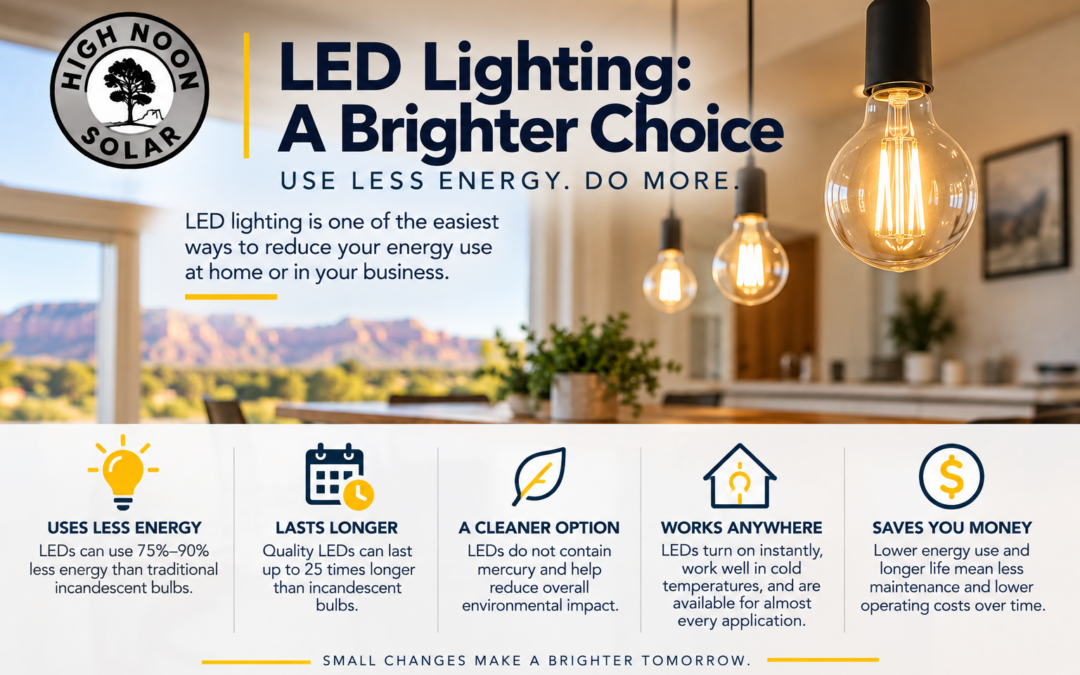
According to the U.S. Department of Energy, LEDs can use about 75% to 90% less energy and last up to 25 times longer than incandescent lighting.
That means less electricity used for lighting and fewer bulbs to replace over time.
What About CFLs?
CFLs were an important step toward more efficient lighting, but they have largely been replaced by LEDs.
They use less electricity than incandescent bulbs, but LEDs generally offer longer life, instant brightness, better cold-weather performance, and do not contain mercury.
If you still have working CFLs, there is usually no need to replace them immediately just for the sake of replacing them. When they eventually fail, LED is usually the more practical replacement.
Choosing the Right LED
When replacing a bulb, wattage is no longer the best way to compare brightness.
Look at lumens, which measure how much light the bulb produces.
Also consider:
- Color temperature
- Dimmability
- Indoor or outdoor rating
- Fixture compatibility
- Bulb shape and size
For example, a warm-white LED can give a room a softer feel, while a cooler color temperature may work better in a garage, shop, or work area.
How Does This Relate to Solar?
Reducing electricity use can be just as important as producing electricity.
Switching inefficient lighting to LEDs can reduce the amount of energy your home or business needs. For someone considering solar, that can help lower overall consumption before the solar system is designed.
The same idea applies to other efficiency improvements such as insulation, heat pumps, smart controls, and efficient appliances.
A good energy plan starts by understanding how much electricity you use and where you use it.
If you are considering solar or other energy improvements, our Energy Consultants can help you look at the bigger picture.